If I could only have 25 plants in my backyard, these are the ones I would choose. They are attractive and hardy, supply nectar and pollen throughout the growing season, attract birds, butterflies, and other pollinators, and provide food for butterfly and moth caterpillars. This information is primarily from my experience and the Shooting Star Nursery catalog. You can also download this list as a 2-page chart (500KB PDF), or a 5-page list with pictures (800KB PDF).
Spring |
|
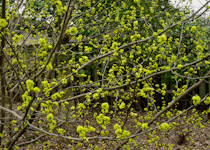 | Spicebush (Lindera benzoin) Type: shrub Flowers: March-April Height: 5-9’ Light preference: sun, shade Moisture: avg Note: Host for Spicebush Swallowtail butterfly |
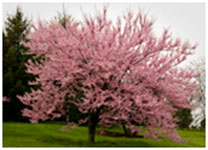 | Redbud (Cercis canadensis) Type: tree Flowers: April Height: 12-25’ Light preference: sun, part shade Moisture: avg Note: Early source of nectar |
 | Wild Columbine (Aquilegia canadensis) Type: perennial Flowers: May-June Height: 1-2’ Light preference: shade, sun Moisture: avg Note: Attracts hummingbirds |
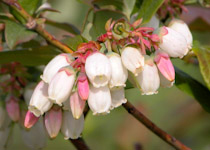 | Blueberries (Vaccinium species) Type: shrub Flowers: May Height: 3-4’ Light preference: sun, part shade Moisture: avg Note: Birds feed on berries; colorful fall foliage |
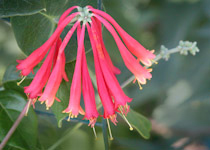 | Trumpet Honeysuckle (Lonicera sempervirens) Type: vine Flowers: April-Oct Light preference: sun, light shade Moisture: avg Note: Red tubular flowers are a magnet for hummingbirds. The vine is not invasive |
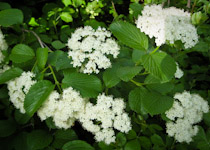 | Arrow-wood Viburnum (Viburnum dentatum) Type: shrub Flowers: April-May Height: 4-15’ Light preference: sun, part shade Moisture: avg Note: Host for Tawny Emperor butterfly, birds enjoy berries |
 | Dutchman’s Pipevine (Aristolochia tomentosa) Type: vine Flowers: May-June Light preference: sun, part shade Moisture: avg Note: Host for Pipevine Swallowtail butterfly; Aristolochia macrophylla similar species |
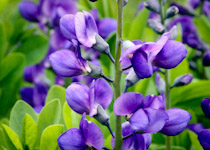 | False Blue Indigo (Baptisia australis) Type: perennial Flowers: May-June Height: 3-5’ Light preference: sun Moisture: avg Note: Showy blue flowers; attractive blue-green foliage |
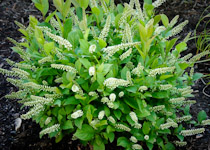 | Virginia Sweetspire (Itea virginica) Type: shrub Flowers: May-June Height: 3-6’ Light preference: sun, part shade Moisture: avg Note: Host for Azure butterfly, early nectar source |
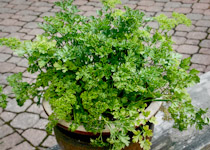 | Golden Alexander (Zizia aurea) as well as non-native Parsley, Dill, Fennel, Carrots Type: Golden Alexander is a native perennial Height: 10-12” Light preference: sun, part shade Moisture: dry-moist Note: Host plants for Black Swallowtail butterfly |
Summer |
|
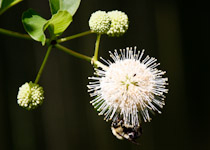 | Button Bush (Cephalanthus occidentalis) Type: shrub Flowers: June-July Height: 5-15’ Light preference: sun Moisture: moist-avg Note: Blossoms attract butterflies and other pollinators |
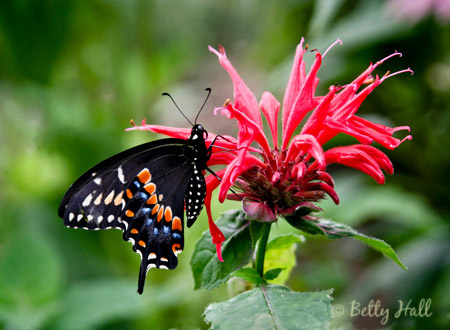 | Scarlet Bee Balm (Monarda didyma) Type: perennial Flowers: June Height: 3-4’ Light preference: sun Moisture: avg Note: Red flowers attract hummingbirds and butterflies |
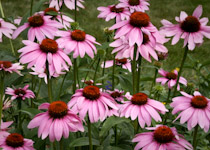 | Purple Coneflower Type: perennial Flowers: June-August Height: 3-4’ Light preference: sun, part shade Moisture: avg Note: Host for Silvery Checkerspot butterfly |
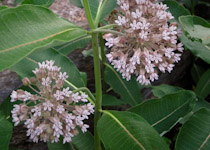 | Common Milkweed (Asclepias syriaca) Type: perennial Flowers: June Height: 3-5’ Light preference: sun, part shade Moisture: avg-moist Note: Host for Monarch butterfly; excellent nectar source |
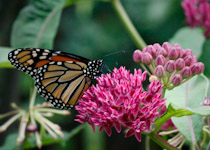 | Purple Milkweed (Asclepias purpurea) Type: perennial Flowers: June-July Height: 2-3’ Light preference: sun Moisture: avg-moist Note: Host for Monarch butterfly |
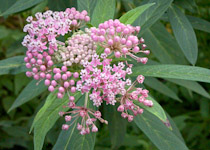 | Swamp Milkweed (Asclepias incarnata) Type: perennial Flowers: July-August Height: 4-5’ Light preference: sun Moisture: avg-moist Note: Host for Monarch butterfly |
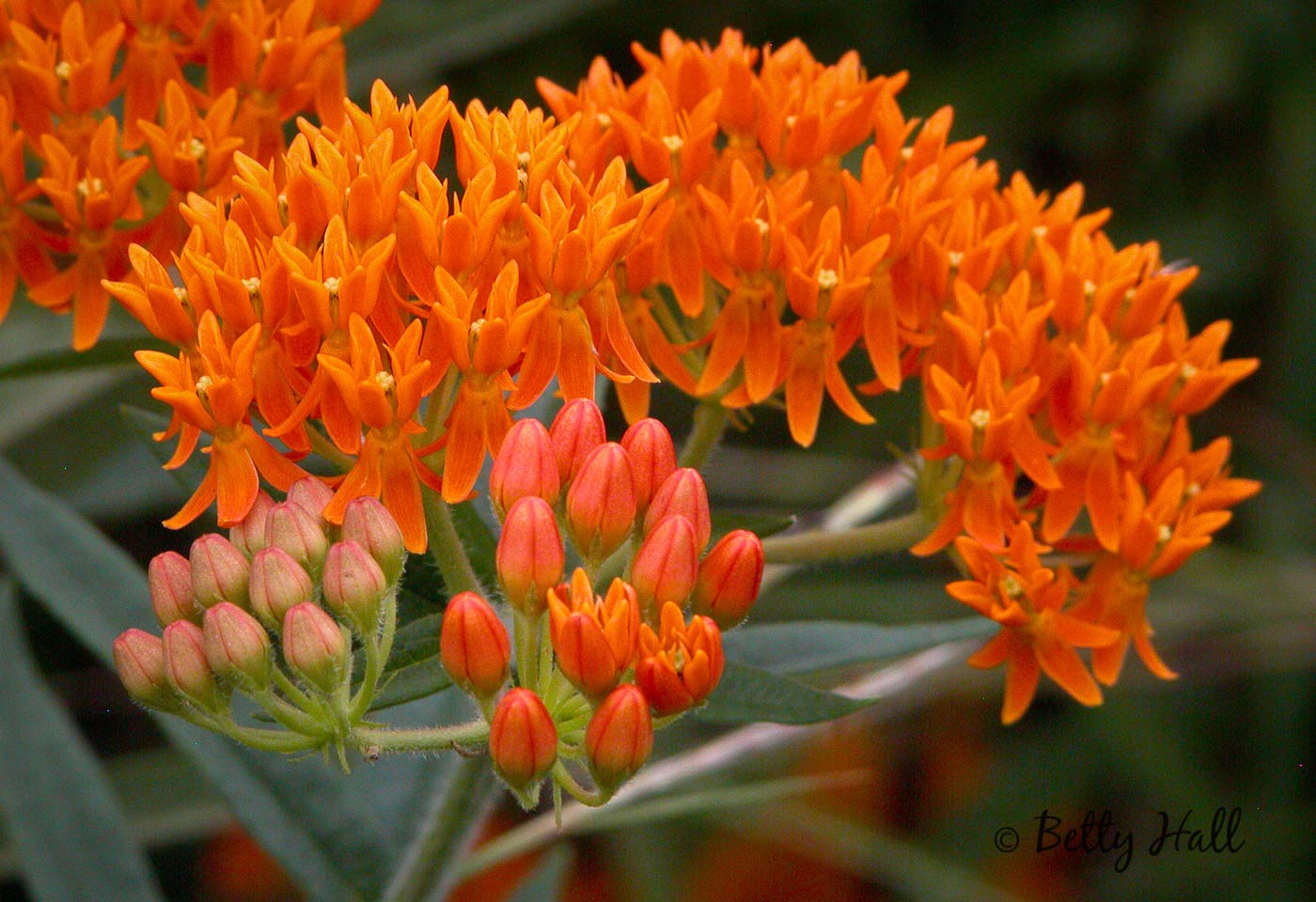 | Butterfly Milkweed (Asclepias tuberosa) Type: perennial Flowers: June-July Height: 2-3’ Light preference: sun Moisture: avg Note: Host for Monarch butterfly |
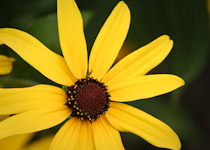 | Sweet Coneflower (Rudbeckia subtomentosa) Type: Perennial Flowers: July-Sept Height: 3-4’ Light preference: sun, part shade Moisture: avg Note: Also called Sweet Susan; similar to Orange Coneflower – Rudbeckia fulgida |
 | Blazing Stars (Liatris species) Type: perennial Flowers: June-Sept Height: 3-6’ Light preference: sun Moisture: avg Note: Provides vertical interest; different species bloom at different times |
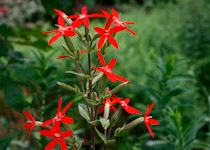 | Royal Catchfly (Silene regia) Type: perennial Flowers: July-August Height: 3-4’ Light preference: sun Moisture: avg Note: Red flowers on tall stems attract hummingbirds |
Fall |
|
 | Mist Flower (Eupatorium coelestinum) Type: perennial Flowers: Aug-Oct Height: 2-3’ Light preference: sun, part shade Moisture: avg-moist Note: Excellent source of nectar late summer and fall |
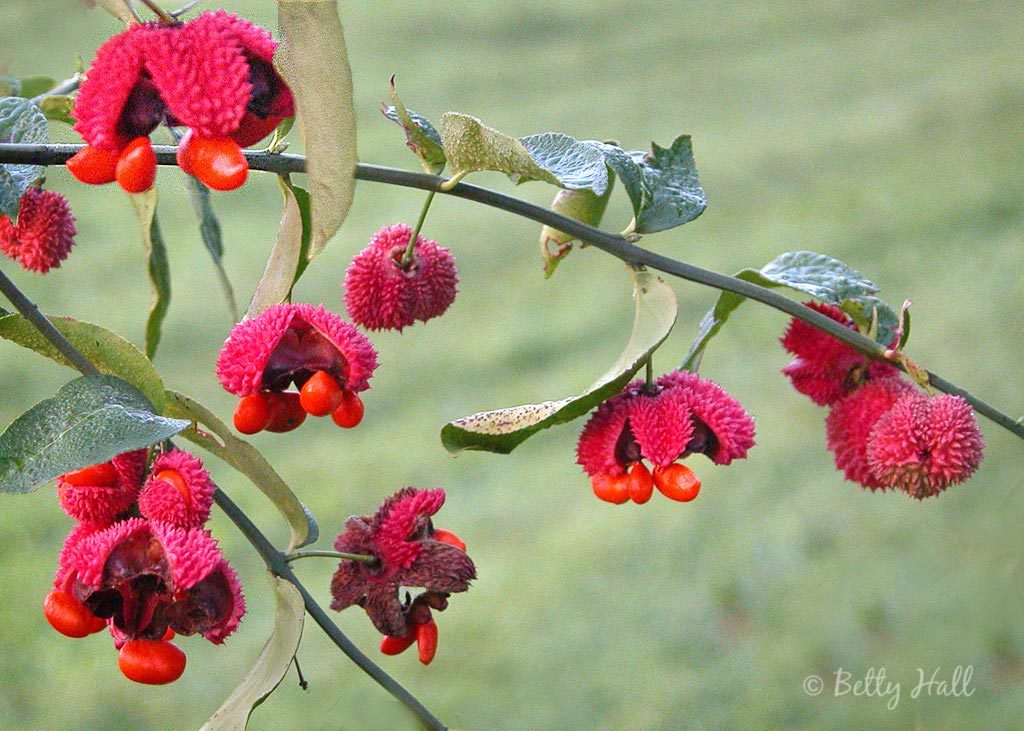 | Hearts-a-Burstin’ (Euonymus americanus) Type: shrub Flowers: May-June Height: Light preference: sun, part shade Moisture: avg-moist Note: Also known as Strawberry Bush; has showy fall fruits |
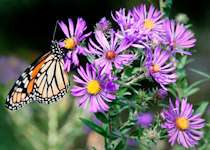 | New England Aster (Aster novae-angliae) Type: perennial Flowers: Sept-Oct Height: 4-5’ Light preference: sun Moisture: avg Note: All asters are hosts for Pearl Crescent butterfly |
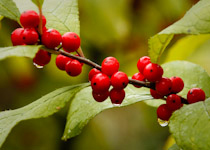 | Winterberry (Ilex verticillata) Type: shrub Flowers: berries/Oct Height: 10-18’ Light preference: sun, part shade Moisture: avg Note: Need both male and female plants to get red berries which attracts birds |
Resources:
Sources for Plants
- Wild Ones annual plant exchange (May).
- Down to Earth Garden Club annual plant sale (May).
- Springhouse Gardens, Nicholasville, KY. Owner Richard Weber is a business member of Wild Ones.
- Michler’s, Lexington, KY.
- Dropseed Native Plant Nursery, near Louisville, KY.
- Local garden centers – It’s good to use the Latin names when asking for plants. Also tell them you are looking for native species.
Books
- Bringing Nature Home – Douglas Tallamy has become a national spokesperson for the value of landscaping with native plants.
- The Life Cycles of Butterflies – by Judy Burris and Wayne Richards. This book is especially helpful for those wanting to learn more about common Kentucky butterflies, host plants, and nectar plants.
- Gardening for Birds – by Thomas Barnes. An excellent source of information about gardening for butterflies as well as birds.
Websites
- Wild Ones – http://lexington.wildones.org/. This is the Lexington chapter of the national organization that encourages landscaping with native plants. Monthly meetings provide information and are open to the public.
- North America Butterfly Association – http://www.naba.org/. An excellent source of information about butterflies.
- Betty Hall Photography – https://www.bettyhallphotography.com/blog. My weekly blogs focus on my experiences with native plants in our backyard.