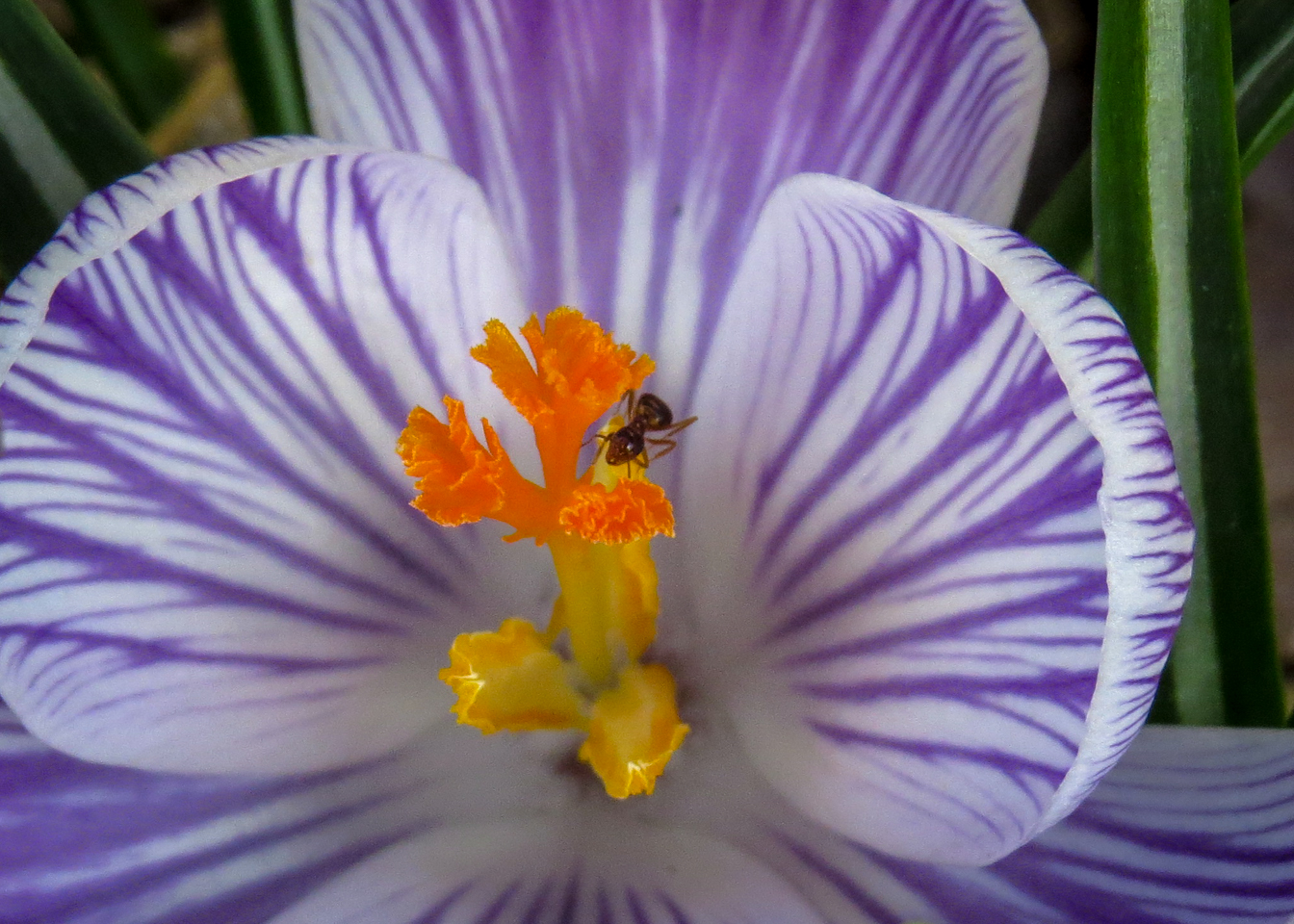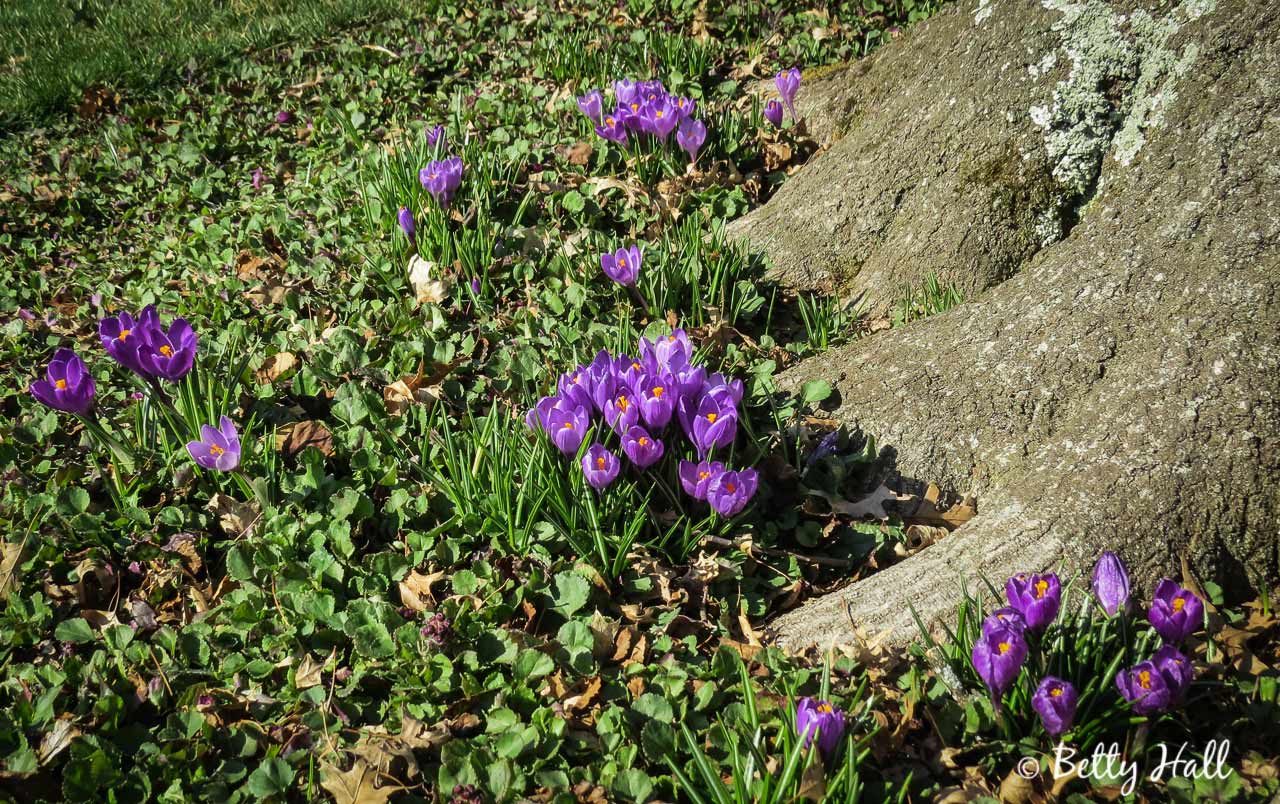
Snow-covered crocus.
Then sun brought resurrection
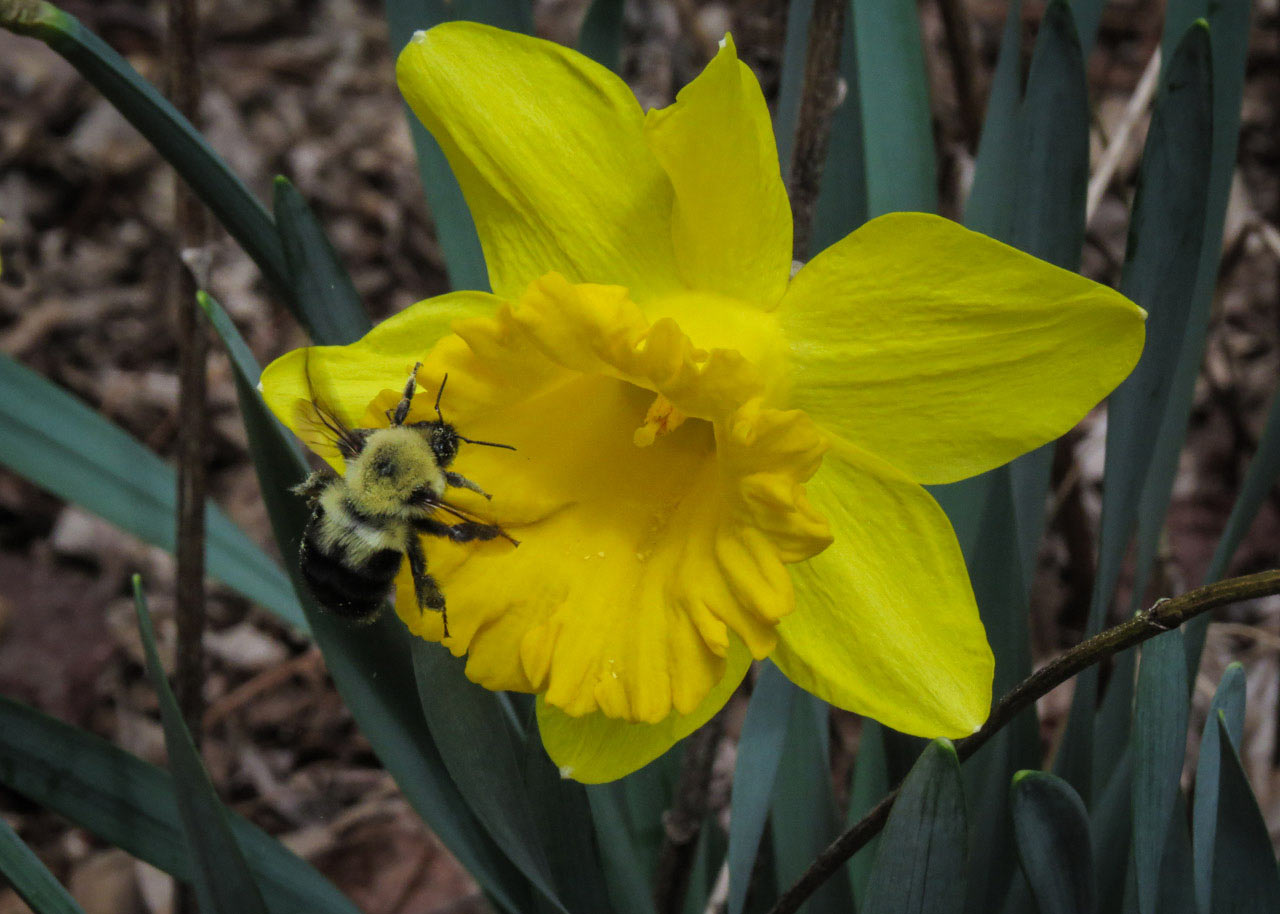
and two honey bees. Continue reading
I was quite surprised to see three green lacewings (family Chrysopidae) one night recently in the kitchen window. These small nocturnal insects are one of my favorites and we often see them in the backyard during the summer. However, I’ve never seen them in January before.

After doing some research, I’ve learned that lacewing adults can survive the winter in protected places. The temperature was 70 degrees when I saw them – unseasonably warm for this time of year. Now our temperatures are more typical for January, with highs in the mid 30′s and lows in the mid 20′s. I’d like to think the lacewings have found a protected place for the winter and will be back at the window this spring.
It was great to see Judy Burris and Wayne Richards at the Kids’ Caterpillar Weekend at Natural Bridge State Resort Park. I always appreciate their lively, entertaining and educational presentations. I’ve thoroughly enjoyed reading their newest book, Nature’s Notes: Bite-sized learning and projects for all ages.
I agree with this quote from a review by Carole Brown, “Nature’s Notes is full of tips and projects to make learning about nature fun for kids of all ages. As an adult, you’ll appreciate the stunning photography that fills these pages. You’ll also get to know your own wildlife garden much better by using the tips in this delightful book.”
After looking at Nature’s Notes, our six-year-old friend Nancy proclaimed that she really liked the photos – “especially the tiny turtle.” Another friend said, “Every household with kids needs a book like this.” I agree. I’m inspired by Judy’s and Wayne’s photography and their ideas for exploring nature, and I’ll be trying several of their suggestions in our backyard. Continue reading
In my experiment with fermented insect bait, my greatest surprise has been the regular appearance of two cicada killer wasps (Sphecius speciosus). I’ve seen them in the backyard before, and they are always flying fast and low to the ground. It’s been a treat to see them up close on the feeder. 
I’ve put out fermented bait (rotten fruit, etc.) to attract butterflies and moths. However, for the last three nights I’ve been surprised to find an ivory-marked beetle (Eburia quadrigeminata) that has come to feed. This is the first one I’ve ever seen and I think it’s quite handsome. It apparently doesn’t bite, although I didn’t test it.